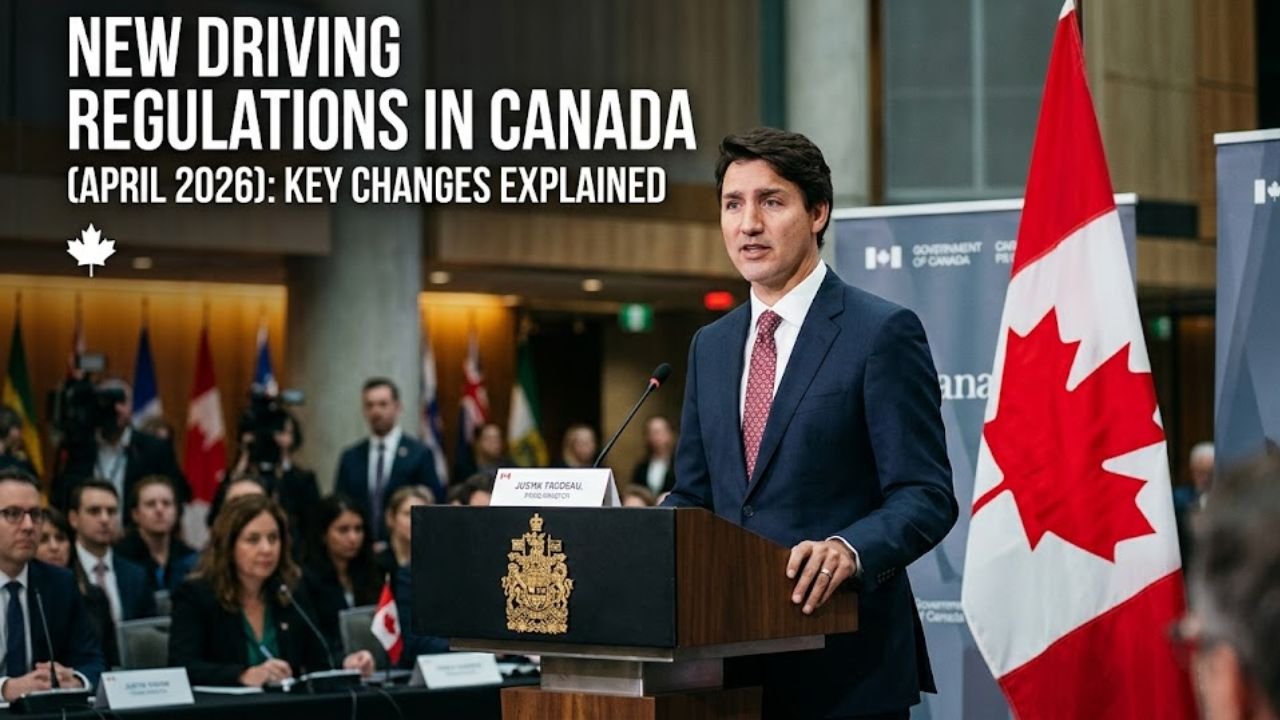
As the Canadian landscape shifts into the spring of 2026, motorists across the country are finding themselves at a crossroads of significant legislative change. The federal and provincial governments have introduced a suite of updated driving regulations effective this April, aimed at modernizing road safety and addressing the evolving technological landscape of our vehicles. These updates are not merely incremental; they represent a fundamental shift in how law enforcement approaches distracted driving, impaired operation, and community safety. For the everyday commuter or the long-haul professional, staying informed is no longer just a matter of courtesy but a necessity to avoid steep financial penalties and maintain driving privileges. By prioritizing high-quality road safety standards, Canada continues to refine its Vision Zero goals, ensuring that every journey—whether through a bustling urban center or a quiet rural route—is underpinned by the latest in protective legislation.
Strict Crackdowns on Distracted and Reckless Driving
One of the most profound changes taking effect this month is the nationwide escalation of penalties for distracted driving. Law enforcement agencies have been equipped with advanced roadside monitoring technology capable of detecting handheld device usage even at higher speeds. In provinces like Ontario and British Columbia, the definition of distraction has expanded to include any interaction with unmounted screens, including non-essential infotainment scrolling. Fines have seen a significant jump, with first-time offenders often facing immediate three-day license suspensions and tickets exceeding $1,000 in certain jurisdictions. This move is a direct response to data showing that distracted driving remains a leading cause of preventable collisions. The focus is clear: the privilege of driving requires undivided attention, and the era of leniency for quick glances at a smartphone has officially ended.
Enhanced Impaired Driving Frameworks and Look-Back Periods
The April 2026 updates have also introduced a more rigorous framework for impaired driving, particularly concerning the “warn range” for blood alcohol concentration (BAC). Provinces are now implementing longer immediate roadside prohibitions (IRP) for drivers caught with a BAC between 0.05 and 0.079. Furthermore, the look-back period for repeat offenses has been extended from five years to ten years in several regions. This means that a prior conviction from a decade ago can now trigger much harsher mandatory education programs and vehicle impoundments for a new infraction. There is also a renewed emphasis on “zero tolerance” for young and commercial drivers, where any detectable trace of cannabis or alcohol leads to an automatic suspension. These measures reinforce a culture of sobriety behind the wheel, acknowledging that the long-term consequences of impaired driving must be reflected in the law to serve as a true deterrent.
New Penalties and Enforcement Standards for 2026
To help drivers visualize the impact of these changes, the following table summarizes the updated standard penalties for some of the most common violations seen across major Canadian provinces as of April 2026.
| Violation Type | Average Fine (CAD) | Demerit Points | Immediate Sanction |
| Distracted Driving (1st Offense) | $1,000 – $1,250 | 3 – 4 Points | 3-Day License Suspension |
| Speeding (20+ km/h over limit) | $600 – $950 | 3 – 4 Points | Mandatory Safety Review |
| Impaired Driving (Warn Range) | $500 + Fees | N/A | 7-Day Roadside Suspension |
| Failure to Yield in Safety Zone | $800 | 3 Points | Required Remedial Course |
| Unauthorized EV Stall Parking | $150 – $300 | 0 Points | Possible Vehicle Towing |
Expansion of Community Safety Zones and Speed Mandates
Beyond individual driver behavior, the 2026 regulations place a heavy emphasis on protected environments. Community Safety Zones, typically found near schools, hospitals, and long-term care facilities, have seen their boundaries expanded. Within these zones, speeding fines are now automatically doubled, and there is a lower threshold for “stunt driving” charges, which can now be triggered by going just 30 km/h over the posted limit in some high-pedestrian areas. This change reflects a growing commitment to protecting vulnerable road users, such as seniors and children. Additionally, many urban municipalities are transitioning to a “default 40” standard for residential side streets, meaning that unless otherwise posted, the maximum speed is 40 km/h. Navigating these areas now requires a heightened sense of situational awareness and a proactive approach to speed management.
Adapting to the Future: EV and Medical Reporting Updates
The final pillar of the April 2026 changes involves the integration of electric vehicles (EVs) and updated health reporting standards. As EV adoption reaches record highs, new regulations strictly govern the use of charging infrastructure. Internal combustion engine vehicles parked in EV charging stalls—a practice known as ICE-ing—now face standardized provincial fines to ensure charging accessibility for those who rely on it. Simultaneously, the medical reporting requirements for drivers have been streamlined through digital portals. Seniors and those with certain chronic conditions are now subject to more frequent, albeit more accessible, online health attestations. These updates ensure that as our vehicle technology and demographics change, the regulatory framework remains agile enough to maintain safety without creating unnecessary bureaucratic hurdles for responsible drivers.
FAQs
Q1 What is the new “warn range” penalty for alcohol consumption?
As of April 2026, drivers caught with a BAC between 0.05 and 0.079 face an immediate 7-day roadside license suspension for a first offense, up from the previous 3-day standard, along with mandatory remedial education.
Q2 Are the fines for distracted driving the same in every province?
While the federal government sets guidelines, specific fines vary. However, most provinces have harmonized their penalties to start around $1,000 for a first offense to ensure a consistent deterrent across the country.
Q3 How do the new speed limits in Community Safety Zones affect my insurance?
Because speeding fines are doubled in these zones and often carry higher demerit point penalties, a conviction in a Community Safety Zone is likely to have a more significant impact on your insurance premiums compared to a standard speeding ticket.